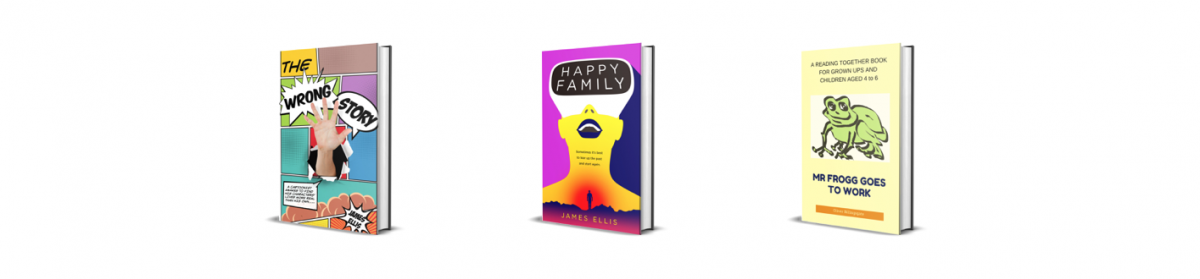
 One of the things I’ve learned (and am still learning) is that once a book has been published, genuine reviews on book sites such as Amazon and Goodreads are like gold. If anyone has read The Wrong Story and liked it, a review on either of those sites would be hugely appreciated. Thank you! And to those that have already written reviews, huge thanks too. You can find out more about The Wrong Story and how to get hold of a copy by clicking here. And you can find it on Goodreads by clicking here.
Category: Writerly Things
The Wrong Story – 503g of obsession
I am obsessed. For the past week The Wrong Story has been available for pre-order. I could go online and look at it, pre-order it if I wanted, search for it. And I have. I can’t stop looking at it. Sales rankings and review stars. At the beginning of the week I was in the top 35000. Yippee!
I have an ISBN, or rather the book does and now I insist on telling people about the breakdown of that number, what it means and why. I searched on it and found my book available for pre-order in France. I spent an hour translating the specification. Guess what? It was exactly the same as the English version.
And it has a shipping weight – 503g. That seems rather heavy for a paperback. I wanted to discuss this aspect in great detail but suddenly I was alone in the room. I compared that weight to many other books and I was right. It is substantial. Does that include the packaging? Has it been printed on vellum or a light metal such as Titanium? What else weighs 503g? I discovered that in making explosives, 503g of a certain compound is required. Now, how long will it be before there is a knock on the door and I am the subject of a rendition?
After months of writing, crowdfunding, editing, hoping and waiting, The Wrong Story is now available to buy, read, review and comment on. So, it’s time to let it go. Stop doing all this and focus on novel number two.
Yes. Let it go…
…but in the meantime, just in case… Click here to see it on Amazon
Yay!

Rolling the pastry
I call it ‘rolling the pastry’. And it’s not a metaphor for something rude. So those of you that thought it was, read no further. You will be disappointed. It’s about writing – again.
I sit down, I start typing and when I look up a few hours later I’ve got about 1000 words sitting on the page. A good days work. Time for a break – walk the dog, strum the ukulele, trim the hedge (none of these are euphemisms either. What is wrong with you? Although in fairness, I haven’t got a dog).
Anyway, when I go back to my desk there it is: a big lump of text waiting for me. It’s time to roll the pastry. This is not editing, it’s simply smoothing out the scene. That initial freewheeling feeling of words just tumbling out can be saved for tomorrow; now I can be  more thoughtful, more considered. And as I go through what I’ve written I add a bit here, change a bit there, explain, illustrate, write – and instead of 1000 words I end up with a nice even layer of 1500 words. I haven’t taken the story any further, I’ve just made the scene I’ve written more digestible. It is very satisfying.
Of course, this is before the editor’s knife cuts it away until there’s not enough left for a jam tart. But that’s work for another day.
I am unblocked
I spoke at the fabulous Bath Writing Events (@WritingEvents) the other day. It was my first outing and I wanted to make a good impression. I made notes, rehearsed against timings, hoped I wouldn’t run out of things to say. And then the night before I spotted an unusually long hair growing out of my eyebrow and I thought using a beard-trimmer would be the best way to deal with it. I showed up at the event with half of my eyebrow missing. Fortunately my hosts were too polite to mention it. This morning I went for a walk and I fell over in the mud.

I mention these two events because they are examples of things just happening, and this brings me, indirectly, to my blockage: I couldn’t get started on Novel Two (catchy title?).
I know what it’s going to be about and I know (roughly) what’s going to happen, but I wanted a loose structure in which to to start writing it – some guiderails to keep me from wandering too far from the path but loose enough to let the story grow naturally; for events to just happen which had yet to be conceived; for the writing to have room to take over. Room for someone to fall over in the mud or shave off their eyebrow, for example.
But that word Structure. It kept getting in the way. Three act, five act, seven act; set-up, conflict, resolution, inciting incident, rising arc, plot points; Plot A, Plot B, midpoint, ascending action… aaarrrgh!! Stop, stop and stop. Please. Enough with the structure. I can’t write with those things staring at me. They take away all the fun. It’s just semantics, I know, but I wanted something… less formal.
So I went back to basics. Stories start and they finish. Was that enough? But ‘once upon a time they lived happily ever‘ isn’t a gripping narrative. So, okay, I supposed I could put in a middle bit too.
‘Once upon a time there was a person who lived somewhere and everything was really good or really bad, and so they decided to do something and everything got even worse or better, and then it all changed so they did something else and lived happily or miserably ever after. The End.‘
That would do. That was as much structure as I wanted. A reusable and very loose framework. I knew that within, there lurked all the context and character introductions and themes and catalysts and climaxes and so on, but those italicised lines were all I needed to get going.
Now I’m writing scene after scene and some go in the beginning bit, and some in the middle, and some at the end. And things are happening which I never expected. It’s working for me. I even have a rough idea where the beginning ends and the end begins. Although, I don’t mind if they don’t. I’m 20,000 words into the first draft and averaging about 1500 to 2000 words a day. I have a minimum goal of 5000 words a week and I’m on target to complete draft one by mid-June, if not earlier.
At least that’s the plan. Tomorrow, before I start writing, I intend to sharpen all my kitchen knives while sitting on a unicycle… What?
I’m in control and I’ve got a spreadsheet to prove it…
It’s been a month now since I began my new life as a full-time writer and things haven’t progressed as well as I’d hoped. On the plus-side, I have registered as self-employed and cleared my ‘to do’ list of anything that wasn’t directly to do with writing – other than ukulele practice, of course. I have completed my feedback on my friend’s novel, put the PhD idea on the back-burner and prepared for a reading later this month. Oh yes, and I’ve sketched out a short-story for a BBC competition. I’ve even been in touch with Unbound and should be getting the page proofs (press ready files) for The Wrong Story to review in the next day or so.
That’s all good. But on the negative-side I have only written one word of my new novel. One word. 1. It is a good word but it needs company. My friend’s novel has 104,000 words. So I’ve constructed a spreadsheet that lays out the challenge. It’s colour-coded with lots of formulae and conditional formatting and pivot tables and all that stuff. It took ages. Then I looked at all the how-to writing books I’ve got, and googled all the how-to writing articles that are out there, and fed that data into my spreadsheet too. That also took ages. But now, just by entering a date, I can calculate when I need to have written the structure, plot points, chapters, characters, scenarios, big scenes, little scenes and upside down scenes of my new novel.
So, let’s see… ah yes. According to my spreadsheet I have to stop faffing around and get writing immediately. Hmmm, I knew that already but I suppose it’s nice to see it laid out in a column.
No distractions
It’s Monday morning. The house is very quiet and I have completed every domestic chore I can think of – ironing, washing, cleaning, mopping the floor, walking the dog. I don’t even have a dog. Note to self: get a dog. Now, I’m ready to write. Novel Number Two. N#2. I’ve given myself three months to complete the first draft.
But now I’m writing this, and this isn’t the novel at all.
I have to get better at this discipline-thing. Last month I had a job and a regular income. Now I don’t. I know. I know. Let’s call it a social experiment; a period of no distractions. Write, write, write. The house is really tidy, by the way.
Discipline and routine, that’s what’s needed. A regular routine. A disciplined regular routine. Of Writing. A disciplined regular writing routine. A regime. A disciplined regular writing routine regime. Regimented. A disciplined regimented regular… did I mention that I’ve almost mastered The Bear Dance on the ukulele? I mean I can get through it. Sometimes. Slowly. If no-one’s listening.
Okay. Enough. Come on, James. Game On. If you’re going to be a professional, you’ve got to be professional. You can do this.
Here we go. The novel.
Hey, the postman’s just come. Excellent.
Go leaflets, go!
From an anthropological perspective (and try saying that with a mouthful of toffee) it’s interesting how people react when I ask them to pledge support for my novel. Some I feel I offend simply by raising the subject. Others ask for more detailed information – certificates of authentication, my licence to write, recent police records, that sort of thing – and one said they might pledge but only after reading the book (that threw me).
But most people just say ‘yes’ and it makes me want to hug them. Over twenty people from my Masters course jumped in without demur. A similar number of friends and colleagues from work stumped up their hard-earned cash and scarcely broke sweat. Friends, family, well-wishers and other writers, other Unbounders, attendees at public readings, have all shouted ‘yes’. My first friend at primary school, from 50 years ago, to whom I haven’t spoken for over 30 years, and whom I found on Facebook and promptly mugged, threw in his money with a humbling generosity. (Have I got all my whoms right here? They are tricky devils. I work on a he/she, him/her basis.)
As I write, 104 people have pledged 70% of my target. There’s a mighty hugfest brewing.
Now it’s time to launch the next stage of the campaign: Project Leaflet. Yes, I’m going old-school: leaflets in cafes, leaflets in libraries, leaflets in bookshops , leaflets through letterboxes – you name it, I’ll leaflet it. If it moves I’ll hand it out, if it doesn’t I’ll stick it on. I am sorry a small tree died to make this possible, but I will plant a new one in its honour this autumn.
And here they are! Waiting like paratroopers to be deployed. Go leaflets, go!


Why Unbound is the right choice for The Wrong Story
Two years ago I started writing my first novel The Wrong Story. Now, bar the final edits, it’s complete. To some extent I thought the journey was over: I’m a writer, I have written. Veni, vidi, vici.
But of course, the journey has only just begun. There is the little matter of publication and distribution. Engaging with mainstream publishers can be a bruising experience. The simple fact is, with diminishing margins and outlets mainstream publishers are less willing and less able to be adventurous with their lists of new authors. We all know this and I accepted it as a universal truth: that is the way it is. Get over it.
But I am learning that it doesn’t have to be that way. I was introduced to Unbound, the trading name of United Authors Publishing, a curated crowdfunding publisher. Unbound are like a mainstream publisher in that they edit, advise, provide high-spec graphic design, run marketing campaigns and publicise. They also distribute through Penguin Random House, which, let’s face it, is pretty good. The difference between Unbound and the traditional publishing model is that their production costs are covered through crowdfunding – people pledging money. This mitigates risk and gives a good view of the potential market.
That all sounds very now, but to be honest I hated the thought of asking people, including friends and family, for money. However, the more I thought about it the more I got it: it wouldn’t be me that would be getting funded, it would be the project, the book. And that, for me, is what this whole journey is about.
I remember standing up for the first public reading of one of my short stories: my legs turned to jelly, my mouth became drier than sandpaper and it seemed quite likely that I would fall over. But none of that mattered because having people hear the story was more important than my physical collapse. I would read it from the floor if I had to. I get the same feeling now when I think about seeking pledges. I want people to read the book.
Of course, the ‘curated’ aspect of Unbound’s business model means that they are as choosy as any mainstream publisher. With all the care and attention I would give to any submission, I pitched my story and then waited in that familiar silence for a yes or a no. But Unbound are fast and after only six weeks (which included the Christmas holidays) they responded – and to my deep joy it was a yes.
So now the journey continues. The contract is signed, I have my own pages on the Unbound site, a ‘shed’ in which I can talk to all my pledgers, a video (oh dear), a sample of the novel, a synopsis, a biography and so on. Unbound are very active on my behalf in pushing the project, but the bringing in of pledges is largely down to me. So I’m getting on with it – tweeting, emailing, going to readings, handing out flyers – and doing all the things that have to be done in order to get the book out there. And it’s exciting. I feel energised and I feel involved in the entire lifecycle of my book. I’m discovering that being an author is not just about writing.
It helps enormously that Unbound believe in The Wrong Story as much as I do. It also helps that I genuinely believe in Unbound – they’re responsive, committed, helpful and very enthusiastic. They’ve got a great list of authors and through their crowdfunding model they’re able to promote a stunning array of titles, one of which made the 2014 Man Booker Prize longlist. It is very now, and it does feel very right.
Looking back, when I was first introduced to Unbound my immediate question was, why would I choose to crowdfund my book? I now realise the question I should have asked was, why wouldn’t I?
To help make The Wrong Story this year’s bestseller (hem), please follow this link and pledge here: https://unbound.co.uk/books/the-wrong-story
For more information on Unbound, please follow this link: https://unbound.co.uk
Notes on The III International Flann O’Brien Conference
Last week I spent four days in the company of Flanneurs, Mylesians, academics, authors, onlookers and whiskey-drinkers. All drawn together by a fascination with the works of… well, it depends. For some he’s Brother Barnabas of Comhthrom Féinne fame; to the Cruiskeen Lawn aficionados he’s Myles na gCopaleen; a few refer to him as George Knowall or John Doe; the strictly accurate call him by his real name, Brian O’Nolan (or even more accurately, Brian Ó Nualláin); but to me, he is and will always be, Flann O’Brien, the author of a perfect novel.

We had gathered together in Prague, at Charles University, for ‘Metamorphoses: The III International Flann O’Brien Conference’. I was there to present my paper titled: Parallel Explorations of the Boundaries between Fiction and Real-Life.
I felt on the boundary myself. At least two of the authors I was citing were also at the conference and the range of papers being presented was so wide it genuinely made my head spin (although there is some speculation that the Kozel beer was a greater cause of my giddiness). There were over 40 papers to be read, and the panels within which they were framed had themes as diverse as modernist poetics, politics, philosophy, humour, sport, metafiction, translation, transliteration, alcohol and alchemy.
What would the great man have made of it all? Why, he would have loved it, of course: the debates, the detailed academic analysis, the occasional tenuous leaps of interpretation, the frankly wild flights of fancy, the social side – oh yes, especially the social side. This was a conference that looked after its attendees. Take a look at this programme of social events:

- a reception hosted by Charles Sheehan, Ambassador of Ireland to the Czech republic;
Val O’Donnell - a lunchtime performance by Val O’Donnell from his Flann’s Yer Only Man & Other Mylesiana;
- Kevin Barry, author of City of Bohane in conversation with Maebh Long;
- a walking tour of literary Prague;
- a theatre performance of Will the Real Flann O’Brien…? A Life in Five Scenes by Gerry Smyth & Co.;
- a whiskey tasting with Fionnan O’Connor, author of A Glass Apart: Irish Single Pot Still Whiskey; and of course
- a final, farewell dinner.
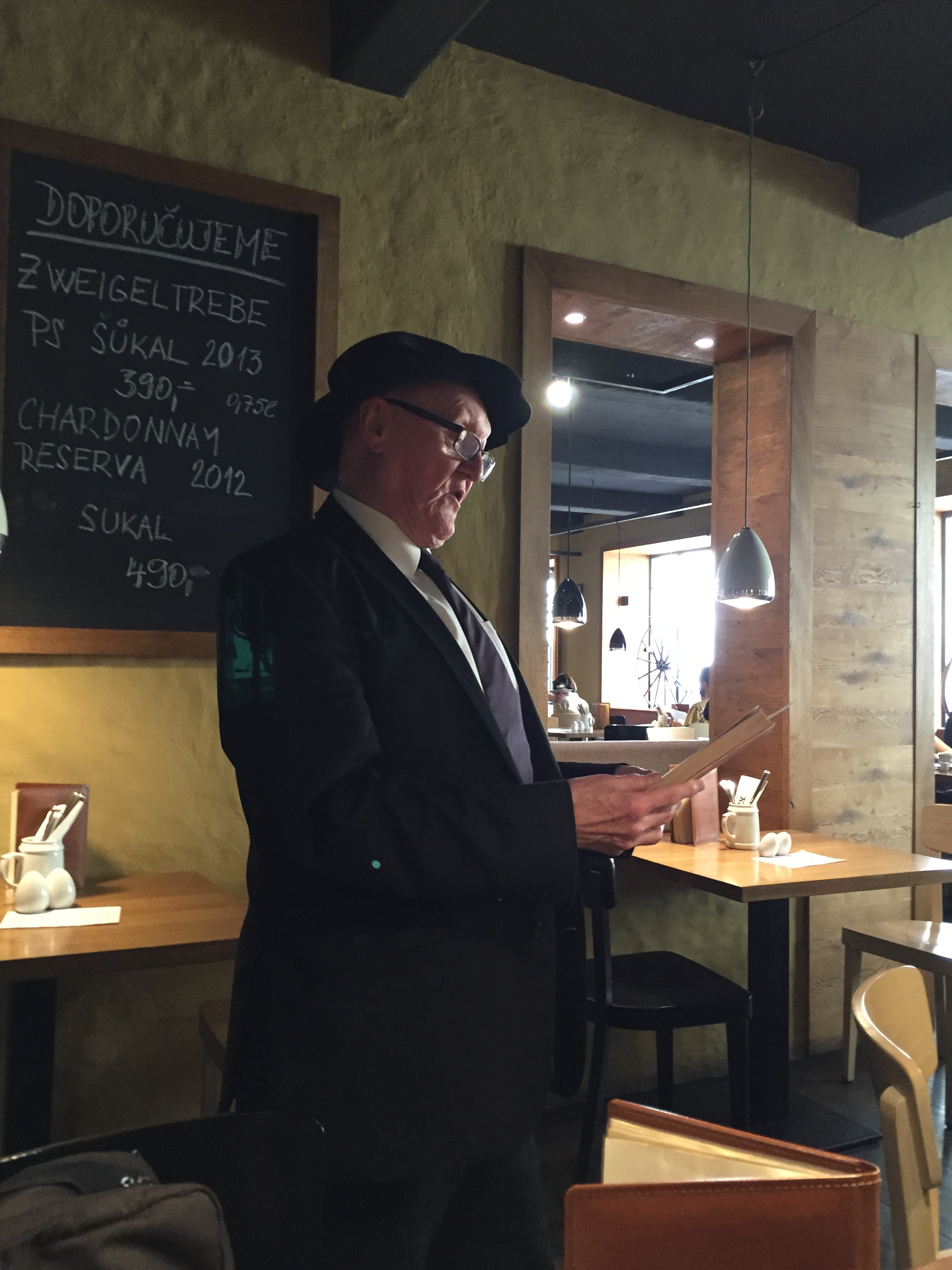
It was no coincidence that the theme of the conference was metamorphosis and the venue was Prague – Kafka’s neck of the woods. Nor was it a coincidence that so many of the speakers felt that through books such as An Béal Bocht, At Swim-Two-Birds and The Third Policeman they could point to their own process of transformation. Certainly my attitude to bicycle saddles underwent a profound change after reading The Third Policeman.
Next year, on April the 1st, it will be fifty years to the day since Flann O’Brien died. He was only 54. It doesn’t matter how you know him – Myles, Flann, Brian – it’s his work that matters. It matters to me and it matters to all the people at the conference who made it such an enjoyable, informative and inclusive experience.
And it should matter to you because he was a genuinely great writer, and such creatures are few and far between.
Thanks to the conference organisers: Ondřej Pilný, Ruben Borg, Paul Fagan; to the Centre for Irish Studies at Charles University; and to the International Flann O’Brien Society. Also to Val O’Donnell, John Wyse Jackson and Rachel Darling – hope to see you all again soon.
A Sublime Sleight of Hand (or Why I Love The Comforters)
UNKNOWN WRITER: It is almost sixty years since the publication of Muriel Spark’s debut novel The Comforters (1957) and for me, it remains one of the finest metafictional novels of all time – all because of one simple, almost casual, feat of literary genius.
SCEPTICAL READER (yawning): Not the G-word again.
UW: Yes, the G-word again. Have you read the book?
SR: Maybe.
UW: Well, just in case, The Comforters tells the story of Caroline who has the apparent delusion that she is hearing her thoughts and actions being typed on an unseen typewriter by an entity she comes to call the Typing Ghost. After some resistance Caroline accepts her status as a fictional character but calls into question the competence of her author. She decides to take control of her own destiny by making notes of the narrative she overhears in order to write her story herself.
SR: So what? I’ve seen that conceit lots of times: an author’s intention to write a novel that is obviously fictional because the art of telling a story that they seek is exactly that – to tell a story and to be seen to be telling a story. End of.
UW: True, but look what Spark does (and barely breaks sweat as she does so): she… hang on, I’m going to have to shout… SPOILER ALERT – I’M GOING TO MENTION THE END OF THE NOVEL. I RECOMMEND YOU READ IT YOURSELF AND THEN REJOIN THIS POST.
SR: That was loud.
UW: Sorry. Anyway, what Spark does is this: she takes her fictional protagonist, Caroline, out of the novel and makes her the author of the book that we, the readers, hold in our hands.
SR: What do you mean?
UW: You have to bear in mind that The Comforters is written in the past tense, so all that happens has happened, even though it is an unfolding story for the characters.
SR: This is going to get complicated, isn’t it?
UW: Yes. So, as I said, Caroline can hear the words of the omniscient narrator. Her boyfriend, Laurence Manders, discovers the notes she’s been taking and writes to her saying that he resents the prospect of being a character in her novel.
SR: I don’t blame him.
UW: Me neither, but you see, we, the readers, see the words he writes but he destroys his letter before Caroline can see it.
SR: Right…
UW: And the novels ends (SPOILER ALERT AGAIN): “and he did not then foresee his later wonder, with a curious rejoicing, how the letter had got into the book” (The Comforters 188).
SR: I see…
UW: One sentence of sublime genius. A fabulous literary sleight of hand.
SR: I don’t get it.
UW: The implication is that Manders later reads a book that Caroline has written in which his letter appears even though he destroyed it before she could read it. That book is The Comforters. Caroline is a paradox. She is both a character in, and the author of, the unfolding events in The Comforters. She is the Typing Ghost that she can hear, and she is the author of the narrative that we are reading.
SR: Uhhh…
UW: To quote: “She was aware that the book in which she was involved was still in progress … and now she was impatient for the story to come to an end, knowing that the narrative could never become coherent to her until she was at last outside it, and at the same time consummately inside it” (The Comforters 165-166). How good is that? That’s why I love The Comforters.
SR: Ah.
 James Ellis in words